Why Ear Protection Is Essential for Industrial Workers
- neoflex52
- 1 day ago
- 6 min read

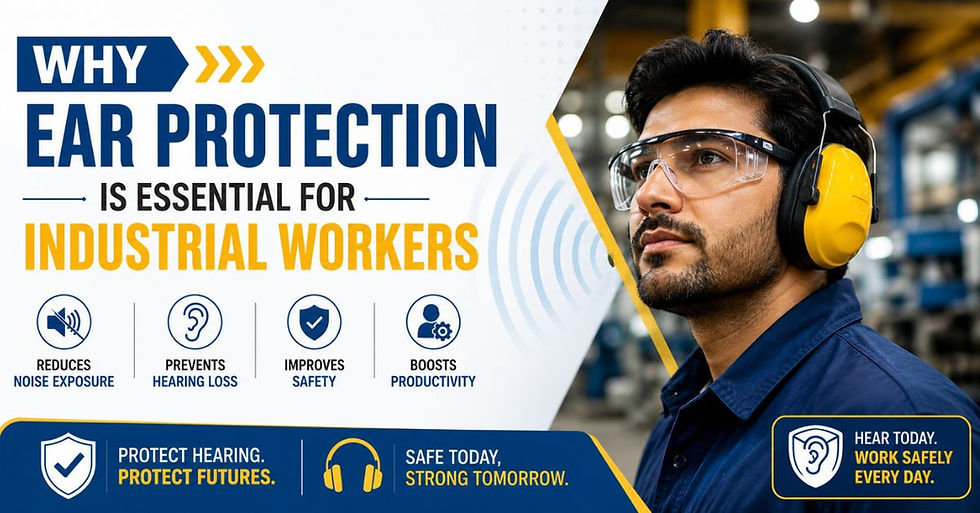
Industrial workplaces are designed to maximize productivity, but they also expose workers to a wide range of occupational hazards. Among these, excessive workplace noise is one of the most common yet often overlooked risks. Continuous exposure to loud machinery, heavy equipment, construction tools, compressors, and manufacturing processes can gradually damage hearing without causing immediate pain or discomfort. Unlike visible injuries, hearing damage usually develops slowly, making it difficult for workers to recognize the problem until permanent hearing loss has already occurred. This is why ear protection plays a vital role in creating a safer and healthier work environment. Proper hearing protection not only helps prevent long-term hearing damage but also improves concentration, communication, and overall workplace safety.
Understanding Industrial Noise Hazards
Industrial environments generate high levels of noise through multiple sources. Manufacturing plants, construction sites, warehouses, mining operations, power plants, and processing facilities all involve equipment that produces continuous or sudden loud sounds. Workers may spend several hours every day in these environments, increasing their exposure to harmful noise levels.
Noise becomes hazardous when its intensity exceeds safe limits or when workers remain exposed for extended periods. Over time, loud sounds damage the tiny sensory cells inside the inner ear. Since these cells cannot regenerate, the resulting hearing loss is usually permanent.
Common industrial noise sources include:
Heavy machinery and manufacturing equipment
Air compressors and pneumatic tools
Metal cutting and grinding machines
Power generators
Forklifts and industrial vehicles
Drilling and demolition equipment
Conveyor systems
Welding operations
Even when noise does not seem unbearable, continuous exposure throughout the workday can significantly affect hearing health.
The Long-Term Impact of Noise Exposure
One of the biggest challenges of occupational hearing loss is that it develops gradually. Workers often adapt to small changes in hearing and may not notice the damage until conversations become difficult or ringing in the ears becomes persistent.
Long-term exposure to excessive noise may lead to permanent hearing impairment that cannot be reversed through medication or surgery. The effects extend beyond hearing itself and may interfere with communication, emotional well-being, and daily activities.
Workers experiencing hearing damage may face difficulties understanding instructions, responding to warning signals, and participating in conversations with colleagues. Over time, hearing impairment can reduce confidence, increase workplace frustration, and affect overall quality of life.
Why Hearing Loss Is Often Preventable
Occupational hearing loss remains one of the most preventable workplace health conditions. Most hearing-related injuries occur because protective measures are either unavailable, improperly used, or ignored.
Employers and employees share responsibility for reducing workplace noise exposure. Engineering controls, administrative measures, regular maintenance of equipment, and personal protective equipment all contribute to hearing conservation.
Consistent use of hearing protection significantly reduces the amount of harmful sound reaching the ears, allowing workers to perform their duties while minimizing long-term risks.
The Importance of Workplace Hearing Conservation Programs
A successful hearing conservation program combines education, monitoring, and protective measures. Rather than relying solely on personal protective equipment, organizations should establish comprehensive systems that reduce overall exposure to hazardous noise.
Effective hearing conservation programs generally include:
Regular workplace noise assessments
Employee training and awareness
Periodic hearing tests
Proper selection of hearing protection devices
Equipment maintenance to reduce unnecessary noise
Continuous monitoring of workplace safety practices
These programs help identify risks before permanent damage occurs while encouraging workers to prioritize hearing safety.
Different Types of Hearing Protection
Industrial workers have access to several forms of hearing protection, each designed for specific workplace conditions. Selecting the appropriate option depends on noise levels, job responsibilities, comfort, and compatibility with other personal protective equipment.
Earplugs
Earplugs fit inside the ear canal and are available in disposable foam, reusable silicone, or custom-molded versions. They provide effective noise reduction while remaining lightweight and comfortable for extended use.
Foam earplugs expand inside the ear canal to create a secure seal, making them suitable for many industrial environments. Reusable earplugs offer durability and can be cleaned regularly for repeated use.
Earmuffs
Earmuffs cover the entire outer ear using cushioned cups connected by an adjustable headband. They provide consistent protection and are easy to wear correctly, making them an excellent option for workers who frequently remove and replace hearing protection.
Many earmuffs are designed to fit alongside safety helmets and face shields commonly used in industrial settings.
Electronic Hearing Protection
Advanced hearing protectors use electronic technology to reduce harmful noise while allowing workers to hear conversations, warning alarms, and important workplace sounds. These devices improve communication without compromising hearing safety.
Electronic models are especially valuable in industries where workers need situational awareness while operating equipment or coordinating with team members.
Benefits Beyond Hearing Protection
Protecting hearing offers advantages that extend well beyond preventing hearing loss. Workers who use appropriate hearing protection often experience improved concentration and reduced fatigue throughout the workday.
Reduced exposure to excessive noise can help employees remain focused on tasks, communicate more effectively, and recognize important warning signals. These improvements contribute to safer operations and fewer workplace incidents.
Additional benefits include:
Improved concentration during complex tasks
Better communication among team members
Reduced stress caused by continuous loud noise
Lower risk of hearing-related accidents
Increased long-term employee well-being
Enhanced workplace productivity
Better compliance with occupational safety regulations
These advantages demonstrate that hearing protection supports both individual health and organizational performance.
The Relationship Between Noise and Workplace Safety
Industrial safety depends heavily on clear communication and awareness of surrounding conditions. Excessive noise interferes with both, making it more difficult for workers to hear verbal instructions, equipment warnings, vehicle movement, and emergency alarms.
Workers struggling to hear important signals may react more slowly during emergencies or misunderstand critical information. These situations increase the likelihood of accidents involving machinery, vehicles, or hazardous materials.
Proper hearing protection helps manage noise exposure while preserving workers' ability to recognize essential sounds when appropriate protective equipment is selected correctly.
Choosing the Right Hearing Protection
Not all hearing protection devices provide the same level of effectiveness. Selecting the correct product requires evaluating workplace conditions and individual job requirements.
Factors to consider include the level of workplace noise, duration of exposure, compatibility with helmets and eye protection, comfort during extended use, and ease of maintenance.
Employees are more likely to wear hearing protection consistently when it fits comfortably and does not interfere with their ability to perform daily tasks.
Proper fit is equally important. Even high-quality hearing protectors lose effectiveness when worn incorrectly or not fully sealed.
Employee Training Makes a Difference
Providing hearing protection alone does not guarantee workplace safety. Workers need proper training to understand why hearing protection matters and how to use it correctly.
Training should explain the risks associated with prolonged noise exposure, demonstrate proper fitting techniques, and encourage consistent use during every shift.
Employees should also understand how to inspect hearing protectors for wear, clean reusable devices properly, and replace damaged equipment promptly.
Regular refresher training reinforces safe habits and keeps hearing conservation an active part of workplace culture.
The Employer's Responsibility
Employers have an essential role in protecting workers from occupational noise hazards. Creating a safe work environment involves identifying hazardous noise sources, implementing control measures, and providing suitable protective equipment.
Organizations should regularly measure workplace noise levels, maintain machinery to reduce unnecessary sound, and ensure employees have access to properly certified hearing protection.
Routine hearing evaluations also help detect early signs of hearing damage, allowing intervention before the condition worsens.
A proactive approach demonstrates commitment to employee health while supporting regulatory compliance and operational excellence.
Common Mistakes Workers Should Avoid
Even when hearing protection is available, improper use can reduce its effectiveness considerably.
Some workers remove ear protection briefly while talking to colleagues or during short breaks near noisy equipment. Unfortunately, even brief exposure to extremely loud sounds may contribute to hearing damage.
Other common mistakes include wearing earplugs incorrectly, using damaged equipment, failing to replace disposable products, or selecting hearing protection with inadequate noise reduction.
Avoiding these mistakes helps maintain consistent protection throughout every work shift.
Building a Culture of Hearing Safety
Organizations achieve the greatest success when hearing protection becomes part of everyday workplace culture rather than simply another safety rule.
Managers, supervisors, and experienced employees should lead by example by wearing hearing protection consistently and encouraging others to do the same. Open discussions about workplace safety, regular inspections, and positive reinforcement help establish long-term habits.
Companies that prioritize hearing conservation often experience improved employee morale, stronger safety performance, and greater awareness of occupational health risks.
Creating a workplace where hearing protection is respected benefits everyone, from new employees to experienced professionals.
The Future of Hearing Protection Technology
Advances in technology continue to improve hearing protection solutions for industrial workers. Modern devices offer greater comfort, better communication capabilities, and enhanced compatibility with other protective equipment.
Smart hearing protection systems now include features such as environmental sound monitoring, wireless communication, Bluetooth connectivity, and adaptive noise reduction. These innovations help workers remain protected while improving collaboration and operational efficiency.
As industrial technology continues to evolve, hearing protection will become even more effective, comfortable, and integrated into comprehensive workplace safety systems.
Conclusion
Industrial noise may seem like a routine part of the job, but its effects can be permanent if left unmanaged. Protecting hearing should never be considered optional, as hearing loss can affect communication, productivity, safety, and overall quality of life for years to come. By combining proper workplace practices, employee education, regular monitoring, and the consistent use of suitable protective equipment, organizations can significantly reduce the risks associated with excessive noise exposure. Investing in ear protection is an investment in worker health, operational efficiency, and long-term workplace safety, ensuring employees can perform their responsibilities confidently while preserving one of their most valuable senses.


Comments